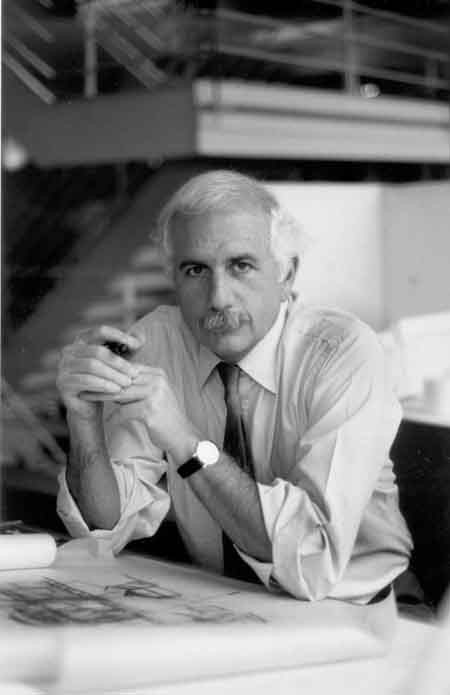

Theorist, architect and educator, Moshe Safdie (July 14, 1938), made his first mark on architecture with his masters thesis, where the idea for Habitat 67 originated. Catapulted to attention, Safdie has used his ground-breaking first project to develop a reputation as a prolific creator of cultural buildings, translating his radicalism into a dramatic yet sensitive style that has become popular across the world. Increasingly working in Asia and the Middle East, Safdie puts an emphasis on integrating green and public spaces into his modernist designs.
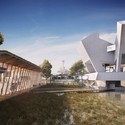
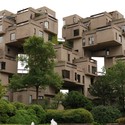
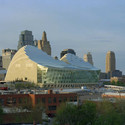


Born and raised in Haifa, Safdie went with his parents to Canada in 1953, and later graduated from Montreal’s McGill University in 1961. His thesis project, the complex that would later become Habitat 67, made waves from the very beginning, attracting attention and becoming highly recognized, although controversially failing to win the Pilkington Prize for architectural theses. Apprenticing with Louis Khan in Philadelphia for a time, Safdie was asked by his former thesis advisor to return to Montreal to develop the master plan for the 1967 World’s Fair in Montreal. Using the opportunity to propose his own thesis as a pavilion, Safdie’s incredible plans were given the green light by Ottawa and he left to work on them independently, despite being only 29 at the time.


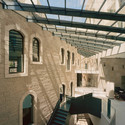
Habitat 67, despite being dramatically scaled down from 1000 housing units to 158 and failing in its goal to spark a revolution of cheap, prefabricated housing, immediately caught the world’s attention and was proclaimed as an architectural wonder. Showing off his goals of integrating modernism with green space and the benefits of suburban living, Safdie successfully built on the wave of attention it brought to construct a successful career as a builder of cultural and public buildings, working on Israel’s Holocaust Memorial, the National Gallery of Canada, La Musée de la Civilisation in Quebec and, more recently, the Kauffman Centre for the Performing Arts.


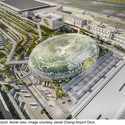
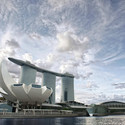
Safdie’s style has also translated well to the new booming economies in Asia and the Middle East, where he has designed projects that blend his philosophy of humanized modern with local traditions and context. Singapore’s tradition of Feng Shui, for example, has inspired his more recent designs for the Marina Bay Hotel and the new “Air Hub” for Singapore’s Changi Airport.
Find out more about Safdie and his works by clicking on the images and via the links below.

AD Interviews: Moshe Safdie / Safdie Architects
AD Classics: Habitat 67 / Moshe Safdie
Source:: http://feedproxy.google.com/~r/ArchDaily/~3/zGms75–wr4/spotlight-moshe-safdie