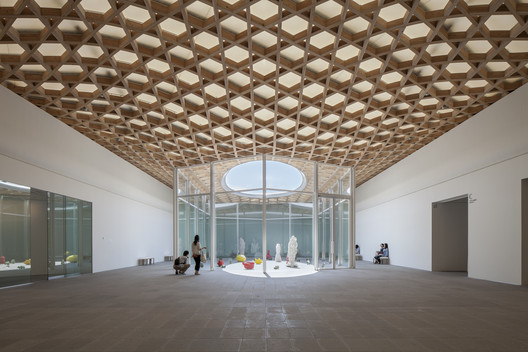

- Architects: Shigeru Ban Architects
- Location: Japan, 〒870-0036 大分県大分市寿町 大分県立美術館
- Project Year: 2015
- Photographs: Hiroyuki Hirai
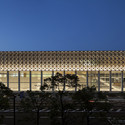

Typical Museums are usually a closed building type which prevents the public from knowing what activities are going on inside and deprives them of the chance to enjoy art.

This Museum aims to draw even those who are not Art-lovers, to visit regularly and enjoy the Museum as a gathering place for the public.

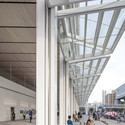
The ground floor atrium is a two-story high open space entirely enclosed by glass making the museum activities transparent from the street.

The atrium is always free for everyone and can be enjoyed as a civic space. There is a cafe and museum shop that is designed to be movable so they can relocate to adjust to the spatial requirements of exhibition layouts within Exhibition Room A. This exhibition room is formed by using movable walls to divide parts of the atrium into typical closed gallery rooms, or into what transforms the entire atrium into an exhibition space. The atrium is constantly changing with each exhibit, so that with each visit, there is a fresh impression of the space.

Furthermore, the entire southern street-side facade of the atrium is composed of operable bi-folding glass doors which can fully open to become a semi-outdoor public space allowing visitors to enter freely. This public space is borne from the idea of the traditional Japanese “Engawa”, which is the covered outdoor space bordering the perimeter of traditional Japanese houses.

A glass facade can create a visual connection between interior and exterior, but still exists as a transparent wall physically separating the spaces. By removing this wall, the museum becomes a facility that becomes one with the city. Also, when the city closes off the fronting street to become what they call a “pedestrian’s paradise”, the street becomes a connected public space. Combined with the cultural center directly opposite of the museum, it is possible to hold huge events together centered around these two cultural facilities, further reinforcing the energy and spirit of Oita City.