Architects: Bruner/Cott & Associates
Location: Lesley University, 29 Everett Street, Cambridge, MA 02138, USA
Architect In Charge: Simeon Bruner, RA; Jason Forney, AIA, LEED AP
Design Team: Meredith Affleck; Adrienne Cali, LEED AP; Nat Crosby; Shaun Dempsey; Alexandra Desaulniers; Karen Greene, RA, LEED AP; Aoife Morris, AIA, LEED AP; Henry Moss, AIA, LEED AP; Gretchen Neeley; Stephanie Power, AIA
Area: 74000.0 ft2
Year: 2015
Photographs: Robert Benson
Project Manager: Greg Russell, AIA
Civil Engineer: BSC Group
Structural Engineer: Souza, True & Partners
Mep Engineer: Van Zelm, Heywood & Shadford
Landscape: Richard Burck Associates, Inc
It/Av Consultant: Acentech, Inc
Lighting: Collaborative Lighting, LLC
Environmental Graphics: Roll, Barresi & Associates
Leed Consultant: Erica Downs, LEED AP
Industrial Hygiene: Gordon Air Quality
Construction Manager: John Moriarty & Associates
Curtainwall & Skylight: Ipswich Bay Glass
From the architect. The Lunder Arts Center at Lesley University’s College of Art and Design is a combined work, juxtaposing nineteenth and twenty-first century buildings to form a contemporary nexus for the arts. For Lesley University’s community of learners, value in the arts is important across all disciplines and lives and is at the core of the university’s educational mission.
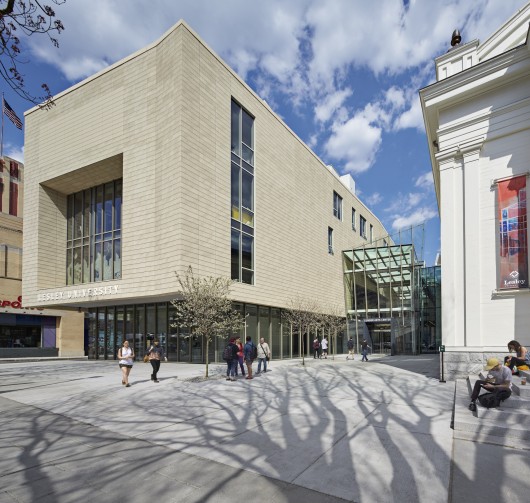
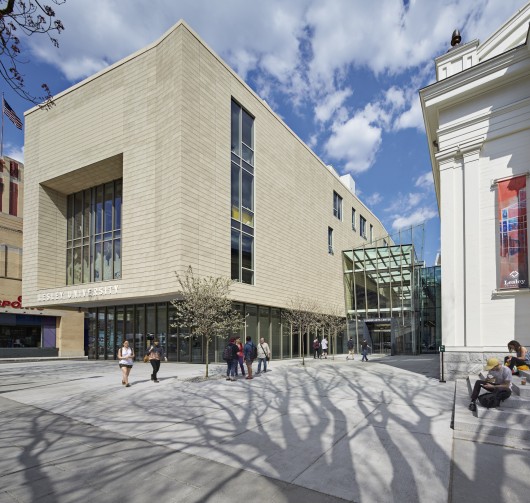
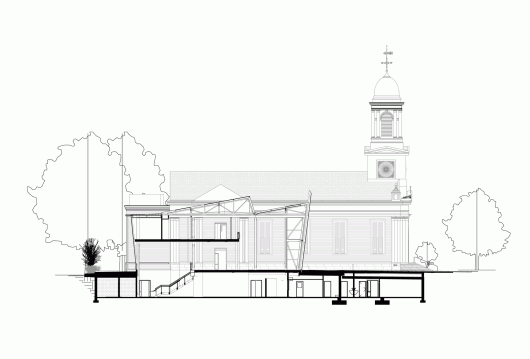
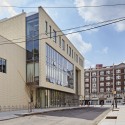
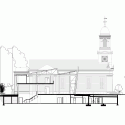
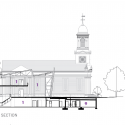
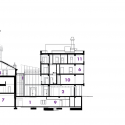
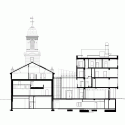
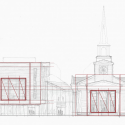
The Center links a historic c.1845 church with a new terra-cotta structure, creating dialogue between nineteenth- and twenty-first century architecture. Exterior materials come from a single palette that responds to its context: glass, terra-cotta, painted clapboard, concrete, steel, copper, and granite.
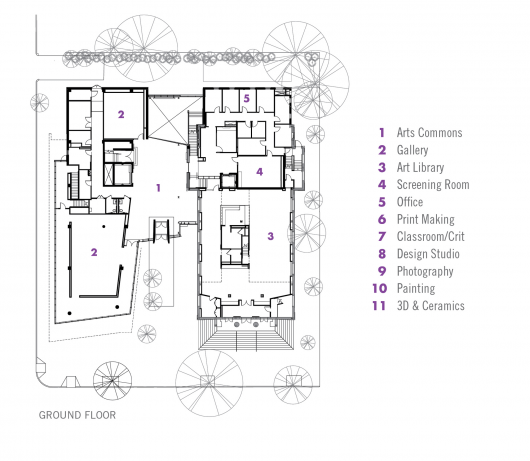
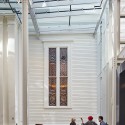
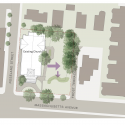
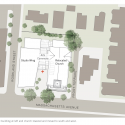
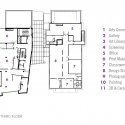
The North Prospect Congregational Church, listed on the National Register of Historic Places, was moved (for the second time in its history) to a more prominent position on the site and fitted with a reconstructed granite based on historic records. The church’s exterior has been restored to its original appearance, and the interior has been reworked and converted to house the school’s art library and design studios. The ground floor is vibrant and transparent and positions the gallery as a participant of the streetscape. An entry plaza adjoins the widened sidewalk. Large glazed areas in the studio wing reveal the creative energy inside.
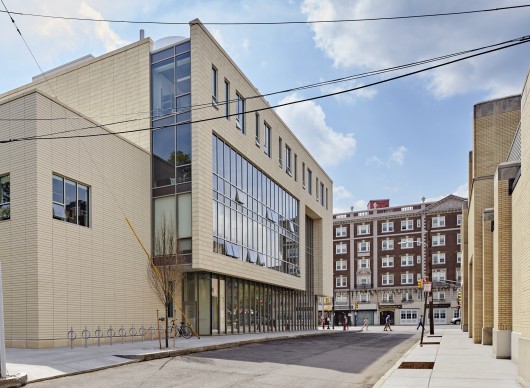
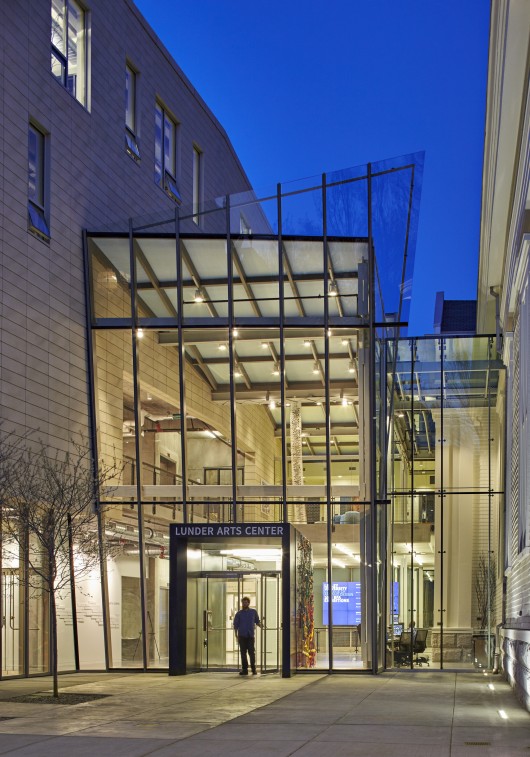
Clad in ivory terra-cotta, the studio wing houses the studio arts, with large north facing windows and curtainwall. The new architecture is informed by the church’s massing, scale and detail, and its facade elements harmonize with the neighborhood’s brick and clapboard context. The transparent ground floor gallery adds vibrancy to the streetscape.
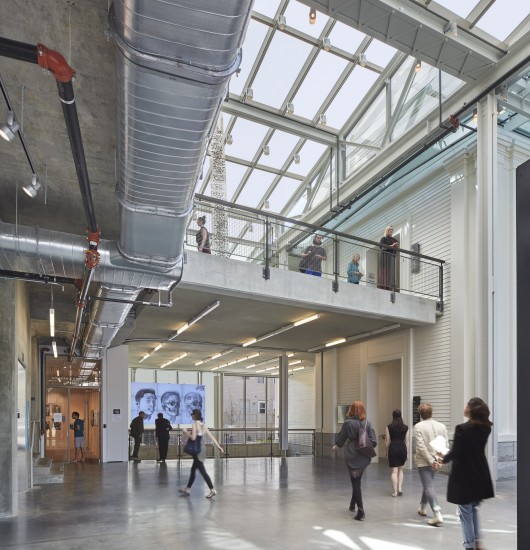
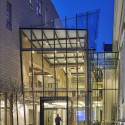
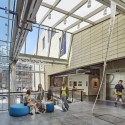
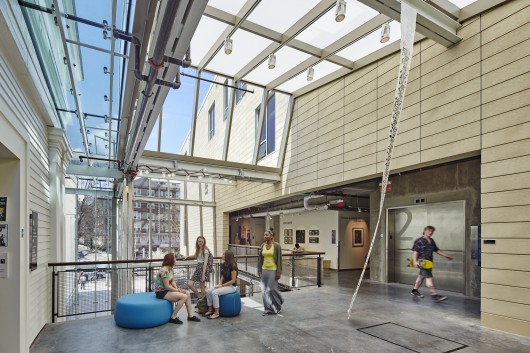
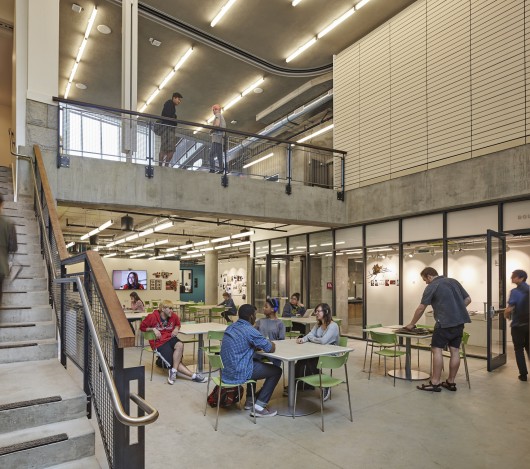
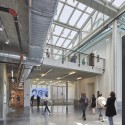
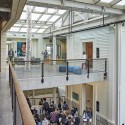
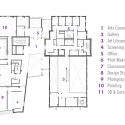
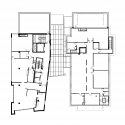
The two wings are connected on the upper floors by a highly-detailed, glass-enclosed commons that includes the main entrance. The saw-tooth form of the connector recalls the industrial buildings so often inhabited by artists and unites the two wings. The program mirrors this link and radiates around this “Arts Commons.” The commons creates opportunities for interdisciplinary connection across artistic mediums, combining studio arts such as painting, drawing, ceramics, graphic design, illustration, printmaking, and sculpture with new media, animation, digital arts, and photography.
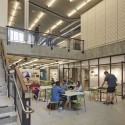
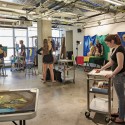
Classrooms are designed as state-of-the-art maker spaces with professional facilities and safety equipment. Anticipating LEED Gold certification, the complex leverages its dense urban site, creates a healthy indoor environment for artists, and is modeled to use 40% less energy than a building designed to the current energy code.
Lunder Arts Center / Bruner/Cott & Associates originally appeared on ArchDaily, the most visited architecture website on 13 Jun 2015.
send to Twitter | Share on Facebook | What do you think about this?
Source:: http://feedproxy.google.com/~r/ArchDaily/~3/m_OzohckCxY/