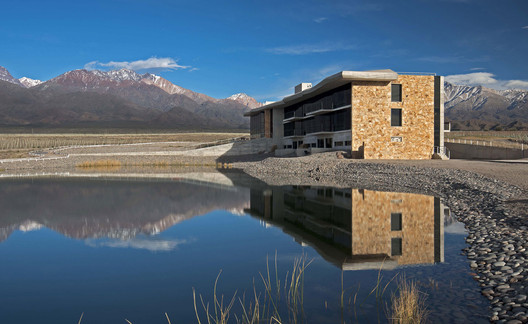
© Daniela Mc Adden
- Architects: Alberto Tonconogy, Gustavo Arditi
- Location: Tunuyán, Mendoza Province, Argentina
- Project Year: 2014
- Photographs: Daniela Mc Adden, Courtesy of Alberto Tonconogy
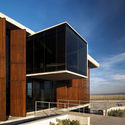
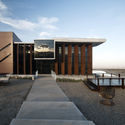
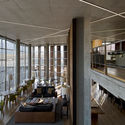
- Contributors Architects: Martina Veiga, Nicolas Bozzano, Alexia Biaus, Elena Toso, Mariana Cavalli, Soledad Allegro
© Daniela Mc Adden
From the architect. From the beginning, the Master Plan of this property was conceived in various phases of development: hotel, bungalows, villas and winery.It’s difficult to achieve this organic process when embarking on nature and environmental projects. In any complex project, resolving unknown issues can lead to even superior results.
Courtesy of Alberto Tonconogy
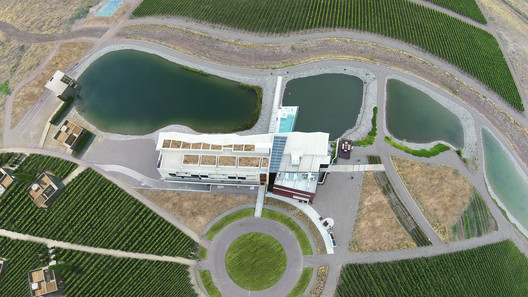
The true challenge was to preserve the untouched soil in its natural state, without intervening in the picturesque scenery. The first task: not to disturb the magnificent environment, while also constructing a more accessibly friendly location.
Courtesy of Alberto Tonconogy
In order to correctly make each detailed decision about the site, it was important to take into consideration the topography of the location. Countless seasonally dry streams flowed down the mountain and were included in the Master Plan.
.jpg?1447906312 "Floor Plan")
Floor Plan
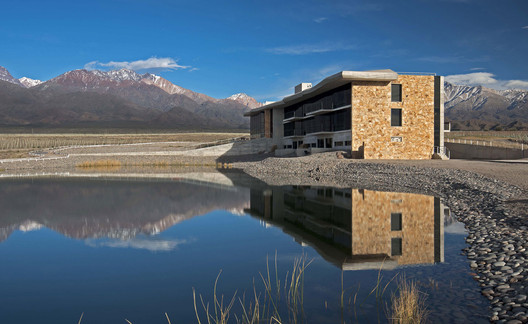
The most notable streams were chosen as the anchor point for development, and to support it, a series of lagoons were constructed near the building.
Courtesy of Alberto Tonconogy
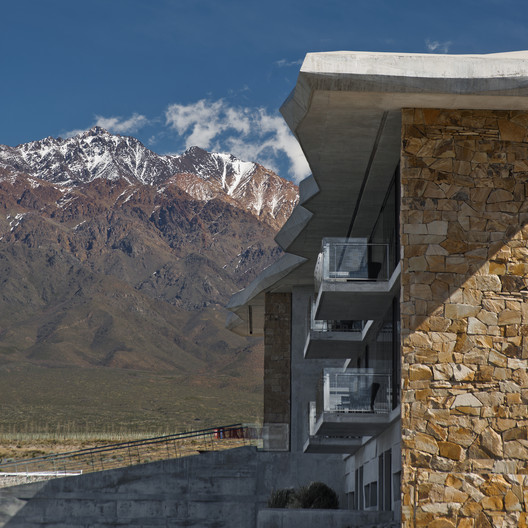
In the absence of any notable scale natural element as a support or anchor of future construction, it was decided to create a tectonic shift mode, a massive and random slab that would grasp the hotel.
Courtesy of Alberto Tonconogy
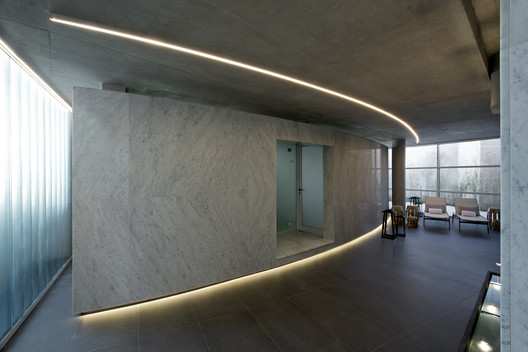
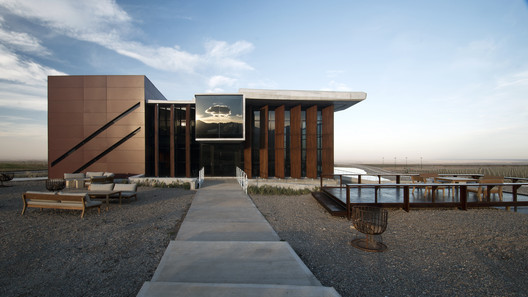
In contrast to this great stone slab, the building is made up of lightweight and minimalist materials.
Courtesy of Alberto Tonconogy
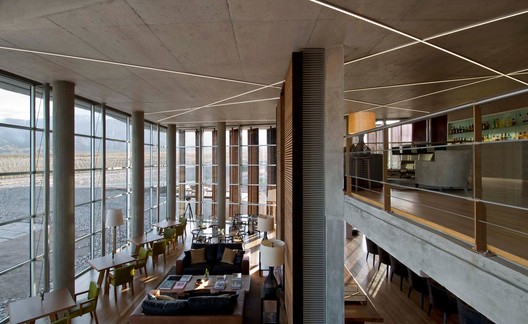
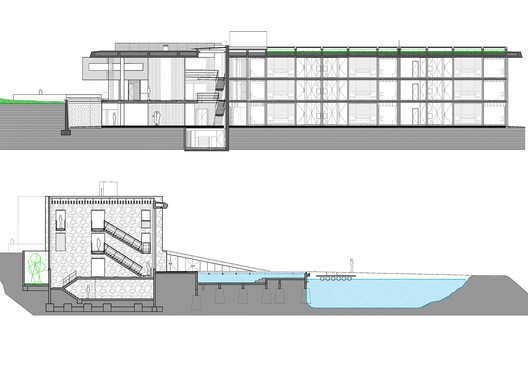
In an effort to construct the ground, the building was made up of elements such as ramps, a “floating” pool, and forestry and trails as arms that were rooted to the environment.
.jpg?1447906343 "Section")
Section
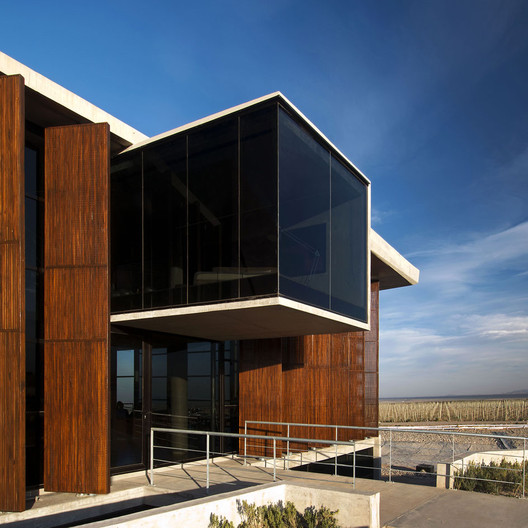
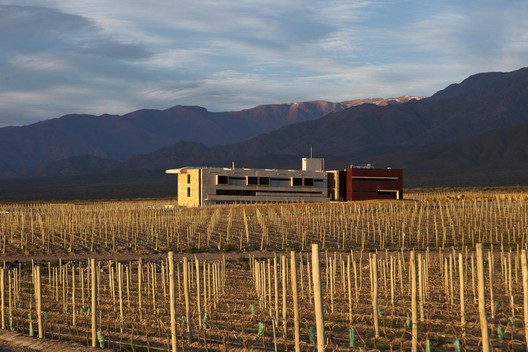
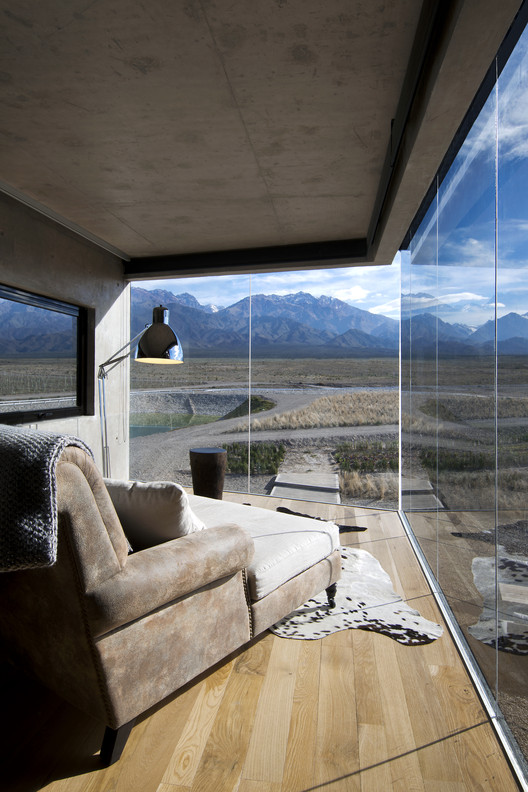
Each facade fully looks to a cardinal point. This position led to four completely distinguishable sides. The windows that were glazed treated towards Valle de Uco coincide with the southern orientation. The facade looking onto the mountains, which face west, were protected with battery parasols, electro-hydraulic and automated movement, which allow to gradually sift this orientation.
Courtesy of Alberto Tonconogy
The north undergoes hard sunlight, the facade is closed, opening only strictly necessary openings.
© Daniela Mc Adden
Since it is situated in an earthquake zone, the whole building is articulated in different structural parts, isolated from each other, which coincide in each case with particular internal functions.
Section
The areas surrounding the hotel, which stand at the original level, emphasizes the aridity of the site. A bed of rocks overlooks the whole lagoon, nearly 400 meters long, standing at the building to show the strong contrast of the land.
© Daniela Mc Adden
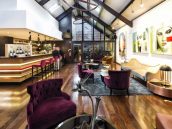
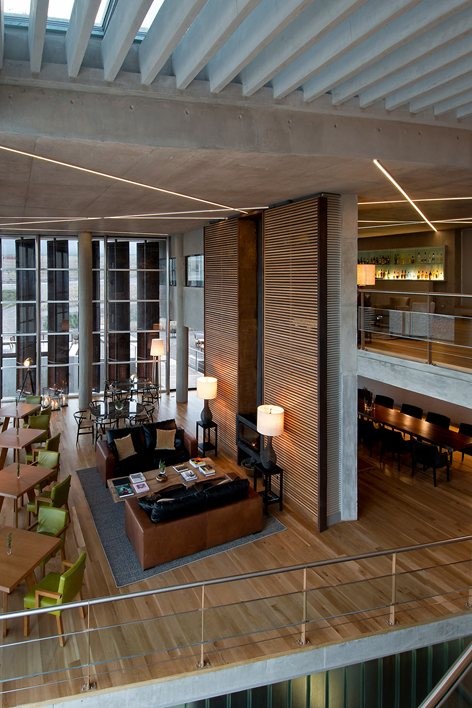
The living-dining room, Cava, playroom and Spa are located within the construction area. There, social activities unfold, sharing a single multipurpose, multilevel space. The adjoining body of the building, is reserved for the rooms. Both zones are separated by a triple height ceiling, which connects both buildings and officiates as the primary seismic fuse.
Source:: http://feedproxy.google.com/~r/ArchDaily/~3/9GzyVVplERQ/casa-de-uco-hotel-alberto-tonconogy