By 杨奡 – YANG Ao

© Jong Oh Kim
- Architects: IROJE Architects & Planners
- Location: Gwangju, South Korea
- Architect In Charge: Seung H-Sang
- Area: 2647.39 sqm
- Project Year: 2009
- Photographs: Jong Oh Kim

© Jong Oh Kim
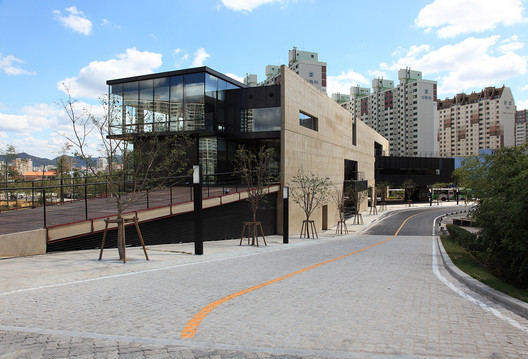
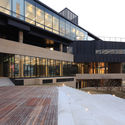
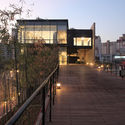
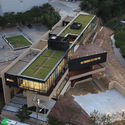
From the architect. Gwangju Biennale Support Center is located in border between GB area and nearby Yongbongje. The areas around GB which should make us associate traditional scenery actually couldn’t do it. High-rise apartment buildings and messy commercial malls are common scenery to make us associate hurried constructed urban outskirts. Therefore, it was our first mission to create GB own cultural scenery by this construction. Also, Gwangjang Yard where visitors and authors meet and part in annually held traditional culture events is very important space. It remains a lot of memories. To achieve clear feature of this space which is also GB’s symbolic place, this construction shall be built as background. So, long walls are stretched.

© Jong Oh Kim
GB and Yongbongje are culture and wild. They are the relation between city and nature. This wall divides two areas to distinguish their functions but at the same time, link their areas.

first floor plan
Scenery seen through open space on the first floor is like picture in a frame. It made both areas meet impressively. This wall faces West. It blocks sunlight from West coming inside. The brown color of this concrete wall becomes strong brown and shines under sunlight in the late afternoon. Like sunlight scenery wavering on mud walls, this wall keeps all memories of events and stuffs developed in Biennale yard.

© Jong Oh Kim
The inside of this wall has small city structure. Small yard, alley, and small parks are in where residents might meet and part frequently to find themselves as members of this small community. Controlled scenery is stretched toward GB but limitless scenery stretches toward Yongbongje. Angle between them appears, making two areas stay in tension and inside space dramatic.

second floor plan
Finally, all of these are the scenery that brown wall makes. This wall is culture wall. It contains memories of all the people who tried to create it. Therefore, this construction might be called the name.

© Jong Oh Kim